
Post
Understanding Speaker Specifications Before You Buy
Jun
Understanding Speaker Specifications
Understanding Speaker Specifications Before You Buy
Choosing the right speaker can be challenging, especially with the wide variety of models available on the market. Manufacturers often advertise impressive specifications and technical features, but many buyers are unsure what these numbers actually mean. Understanding speaker specifications is essential because it helps consumers make informed purchasing decisions, compare products accurately, and select a speaker that matches their listening preferences and budget.
Whether you are looking for a portable Bluetooth speaker, a smart speaker, a home theater system, or a high-end audiophile setup, knowing how to interpret specifications can save you time, money, and frustration. This comprehensive guide explains the most important speaker specifications, how they affect sound quality, and what you should consider before making a purchase.
Why Speaker Specifications Matter
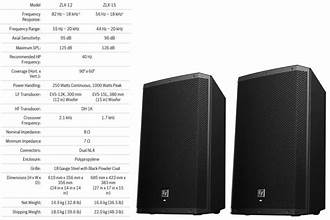
Speaker specifications provide technical information about a speaker’s performance capabilities. While specifications do not tell the entire story, they offer valuable insights into how a speaker is designed and how it may perform in different environments.
Understanding these specifications helps you:
- Compare speakers objectively
- Match speakers to your room size
- Determine compatibility with amplifiers
- Evaluate sound quality potential
- Avoid marketing gimmicks
- Find the best value for your budget
Many consumers focus solely on brand names or appearance, but the technical specifications often reveal far more about a speaker’s actual performance.
Frequency Response
One of the most important specifications is frequency response.
What Is Frequency Response?
Frequency response indicates the range of sound frequencies a speaker can reproduce.
It is usually expressed as:
20Hz – 20kHz
The human ear typically hears frequencies between:
- 20Hz (deep bass)
- 20,000Hz (high treble)
A speaker with a wider frequency range can reproduce more details across the audio spectrum.
Understanding Low Frequencies
Lower frequencies represent bass sounds such as:
- Kick drums
- Bass guitars
- Movie explosions
- Electronic music basslines
Examples:
- 20Hz = Very deep bass
- 40Hz = Strong bass
- 60Hz = Moderate bass
A speaker that reaches lower frequencies generally produces more impactful bass.
Understanding High Frequencies
Higher frequencies represent:
- Vocals
- Cymbals
- String instruments
- Fine musical details
Examples:
- 10kHz = Bright sounds
- 15kHz = Sparkling highs
- 20kHz = Full treble range
Clear high-frequency reproduction contributes to detailed and natural sound.
Why Frequency Response Matters
A broader frequency response often results in:
- Better bass extension
- Improved detail
- More balanced sound
However, frequency range alone does not guarantee quality. How accurately a speaker reproduces those frequencies is equally important.
Sensitivity Rating
Sensitivity measures how efficiently a speaker converts power into sound.
How Sensitivity Is Measured
Sensitivity is typically expressed in:
dB (decibels) at 1 watt, measured from 1 meter
Examples:
- 85dB = Less efficient
- 88dB = Average
- 90dB+ = Highly efficient
Why Sensitivity Matters
Higher sensitivity speakers produce more volume using less amplifier power.
For example:
- Speaker A: 85dB sensitivity
- Speaker B: 91dB sensitivity
Speaker B will sound significantly louder using the same amplifier.
Choosing the Right Sensitivity
Small rooms:
- 85–88dB is often sufficient
Large rooms:
- 90dB+ is recommended
High-sensitivity speakers are especially beneficial for home theaters and large entertainment spaces.
Power Handling
Power handling indicates how much electrical power a speaker can safely manage.
RMS Power
RMS (Root Mean Square) power represents continuous power handling.
Example:
100W RMS
This means the speaker can handle 100 watts continuously without damage.
Peak Power
Peak power refers to short bursts of power.
Example:
200W Peak
This does not mean the speaker can continuously handle 200 watts.
RMS power is generally the more useful specification.
Common Misconceptions
Many buyers assume higher wattage means better sound.
In reality:
- Wattage does not directly indicate sound quality.
- Speaker efficiency matters just as much.
- Amplifier quality also affects performance.
A well-designed 50W speaker may outperform a poorly designed 200W speaker.
Impedance
Impedance refers to the electrical resistance a speaker presents to an amplifier.
It is measured in:
Ohms (Ω)
Common ratings include:
- 4Ω
- 6Ω
- 8Ω
Why Impedance Matters
Amplifiers are designed to work with specific impedance levels.
Matching speaker impedance ensures:
- Safe operation
- Optimal performance
- Reduced risk of equipment damage
Typical Home Speakers
Most home speakers use:
8 Ohms
Many modern amplifiers support:
- 4Ω
- 6Ω
- 8Ω
Always verify compatibility before purchasing.
Driver Size and Configuration
Drivers are the components responsible for producing sound.
Woofer
Woofers reproduce low frequencies.
Common sizes:
- 4-inch
- 5.25-inch
- 6.5-inch
- 8-inch
- 12-inch
Larger woofers generally produce deeper bass.
Tweeter
Tweeters reproduce high frequencies.
Common sizes:
- 0.75-inch
- 1-inch
- 1.5-inch
Quality tweeters contribute to clarity and detail.
Midrange Drivers
Midrange drivers handle frequencies between bass and treble.
These are important for:
- Vocals
- Guitars
- Dialogue
Multi-Driver Systems
Many speakers use multiple drivers for improved performance.
Examples:
2-Way Speaker
Includes:
- Woofer
- Tweeter
3-Way Speaker
Includes:
- Woofer
- Midrange
- Tweeter
Three-way designs often provide greater accuracy across the frequency spectrum.
Speaker Design Types
The enclosure design significantly affects sound characteristics.
Sealed Speakers
Advantages:
- Accurate bass
- Tight sound
- Better transient response
Disadvantages:
- Less bass output
Ported Speakers
Advantages:
- Stronger bass
- Greater efficiency
Disadvantages:
- Potential bass distortion
Ported speakers are extremely popular for home entertainment systems.
Passive Radiator Designs
Passive radiators improve bass response without traditional ports.
Benefits include:
- Deeper bass
- Reduced port noise
- Compact design
Many modern Bluetooth speakers use passive radiators.
Signal-to-Noise Ratio (SNR)
Signal-to-Noise Ratio measures the relationship between desired audio and background noise.
Example:
90dB SNR
Higher values indicate cleaner sound.
Typical ratings:
- 70dB = Acceptable
- 80dB = Good
- 90dB+ = Excellent
A higher SNR generally means less hiss and distortion.
Total Harmonic Distortion (THD)
THD measures unwanted distortion introduced during sound reproduction.
Example:
0.1% THD
Lower values are better.
Common guidelines:
- Under 1% = Good
- Under 0.5% = Very good
- Under 0.1% = Excellent
Lower distortion results in cleaner and more accurate sound.
Bluetooth Specifications
For wireless speakers, Bluetooth specifications are important.
Bluetooth Version
Common versions include:
- Bluetooth 5.0
- Bluetooth 5.1
- Bluetooth 5.2
- Bluetooth 5.3
Newer versions provide:
- Better range
- Improved efficiency
- Faster pairing
Audio Codecs
Codecs affect wireless audio quality.
Popular codecs include:
- SBC
- AAC
- aptX
- aptX HD
- LDAC
Higher-quality codecs can deliver better sound over Bluetooth connections.
Battery Life
Portable speakers often include battery specifications.
Important factors include:
- Playback duration
- Charging speed
- Battery capacity
Typical ranges:
- Small speakers: 6–10 hours
- Medium speakers: 10–20 hours
- Premium models: 20–40 hours
Long battery life is especially valuable for travel and outdoor use.
Waterproof and Durability Ratings
Portable speakers frequently feature IP ratings.
Understanding IP Ratings
Examples:
- IPX4 = Splash resistant
- IPX7 = Waterproof
- IP67 = Dustproof and waterproof
Higher ratings provide greater protection for outdoor use.
Smart Features
Modern speakers increasingly include smart capabilities.
Popular features:
- Voice assistants
- Multi-room audio
- Streaming integration
- Smart home control
- Automatic room calibration
These features add convenience and functionality beyond traditional audio playback.
Room Size Considerations
Speaker specifications should match your listening environment.
Small Rooms
Recommended:
- Compact bookshelf speakers
- Moderate power
- Smaller drivers
Medium Rooms
Recommended:
- Larger bookshelf speakers
- Tower speakers
- Stronger amplifiers
Large Rooms
Recommended:
- Floor-standing speakers
- High sensitivity
- Larger woofers
- Higher power handling
Proper matching ensures optimal performance.

Common Marketing Myths
More Watts Means Better Sound
False.
Sound quality depends on:
- Speaker design
- Driver quality
- Sensitivity
- Amplifier performance
Bigger Speakers Are Always Better
Not necessarily.
Modern engineering allows compact speakers to produce impressive sound.
Frequency Range Alone Determines Quality
False.
Accuracy is more important than simply reproducing a wide range of frequencies.

Questions to Ask Before Buying
Before purchasing a speaker, consider:
- What is my budget?
- How large is my room?
- Will I use it indoors or outdoors?
- Do I need portability?
- Is wireless connectivity important?
- Do I want smart features?
- What type of music do I listen to most?
- Will the speaker be used for movies or gaming?
Answering these questions helps narrow your options.

Future Trends in Speaker Specifications
Speaker technology continues to evolve rapidly.
Future developments may include:
- AI-powered sound optimization
- Adaptive room acoustics
- Advanced spatial audio
- Higher-resolution wireless streaming
- More sustainable materials
- Improved battery technology
These innovations will further enhance performance and user experiences.
Conclusion
Understanding speaker specifications before you buy is essential for making an informed decision. While marketing materials often emphasize flashy features and high wattage numbers, the most important specifications include frequency response, sensitivity, power handling, impedance, driver configuration, distortion levels, and connectivity options.
By learning what these specifications mean and how they affect performance, consumers can choose speakers that match their needs, preferences, and environments. Whether you’re shopping for a portable Bluetooth speaker, a smart home device, or a high-end audio system, a solid understanding of speaker specifications ensures you get the best possible value and listening experience.
Rather than focusing on a single number or feature, evaluate the complete package. The ideal speaker is not necessarily the most expensive or the most powerful—it is the one that delivers the sound quality, functionality, and convenience that best suit your lifestyle.
